Skate Across Africa expands skateboarding beyond isolated local scenes into a continent-scale mission, following Gnars shredders pushing from Uganda toward South Africa through travel, community connection, and raw documentation. The project operates at the intersection of skate culture, media, and onchain coordination.
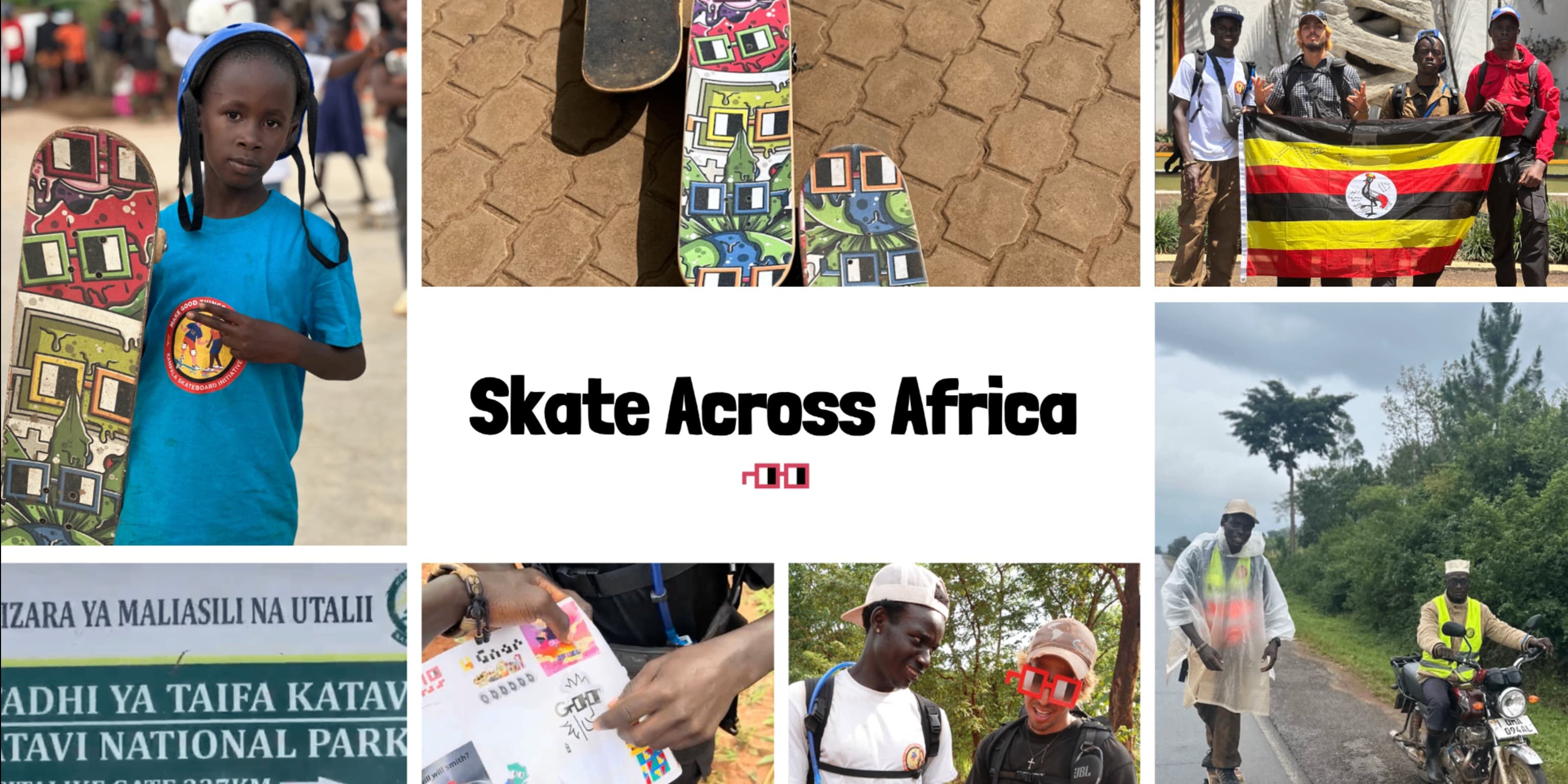
Skateboarding is often documented through local scenes, specific cities, and isolated crews. Skate Across Africa shifts that scale.
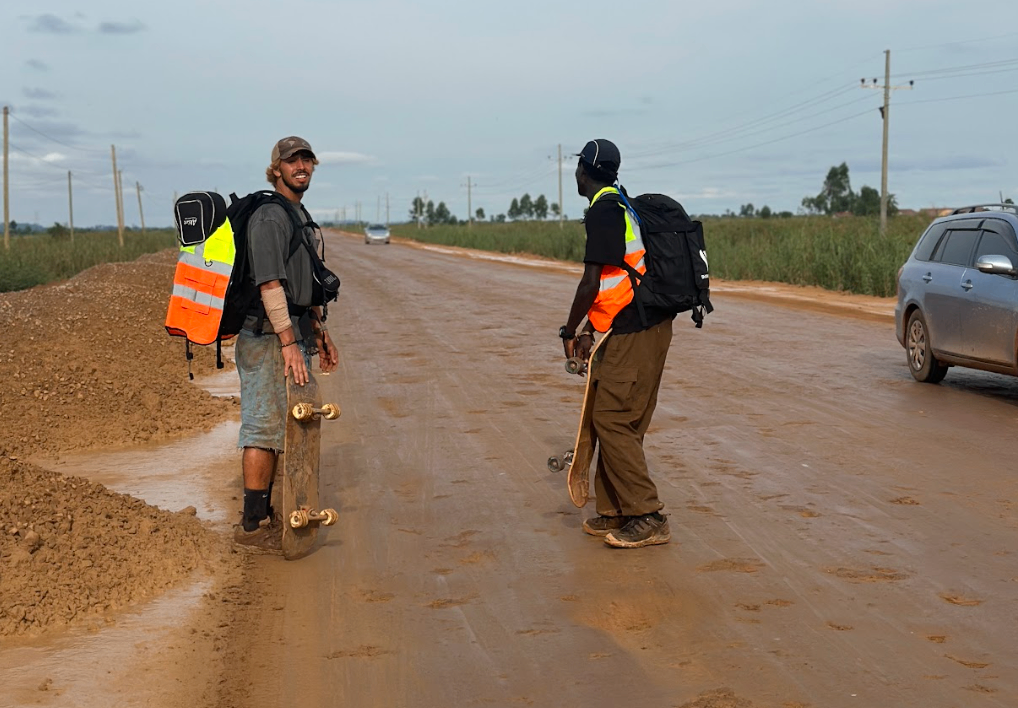
What began as a Gnars proposal became a continental mission led by Isaac Jojinah, Ephraim Ssekiziyivu, and Jason “Jaayfilms” Vanporppal. The route runs from Uganda toward South Africa, combining long-distance travel, community contact, and continuous documentation.
The result is an athlete-led project operating at the intersection of skateboarding, media production, and onchain coordination.
The mission came into the Gnars ecosystem through governance.
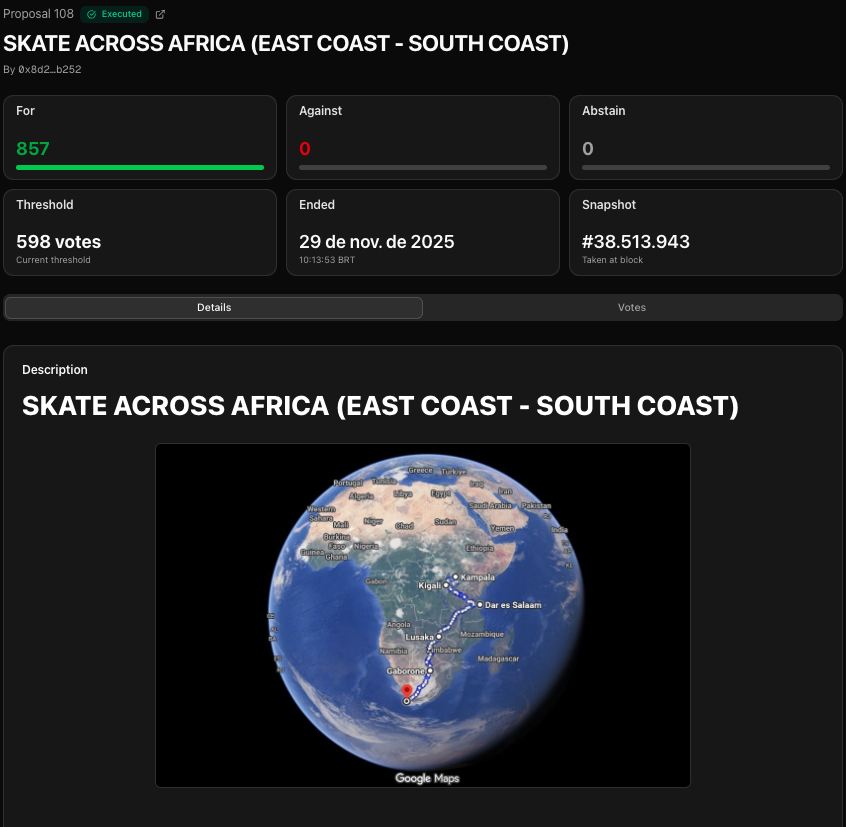
After an earlier version stalled, the idea returned stronger as Gnars Proposal 108 — “SKATE ACROSS AFRICA (EAST COAST - SOUTH COAST)”, and it passed into execution with a clean mandate from the DAO.
Proposal signal
Status: Executed
For: 857
Against: 0
Abstain: 0
Threshold at the time shown on Gnars: 598 votes
The proposal framed the route clearly: Uganda → Rwanda → Tanzania → Zambia → Botswana → South Africa.
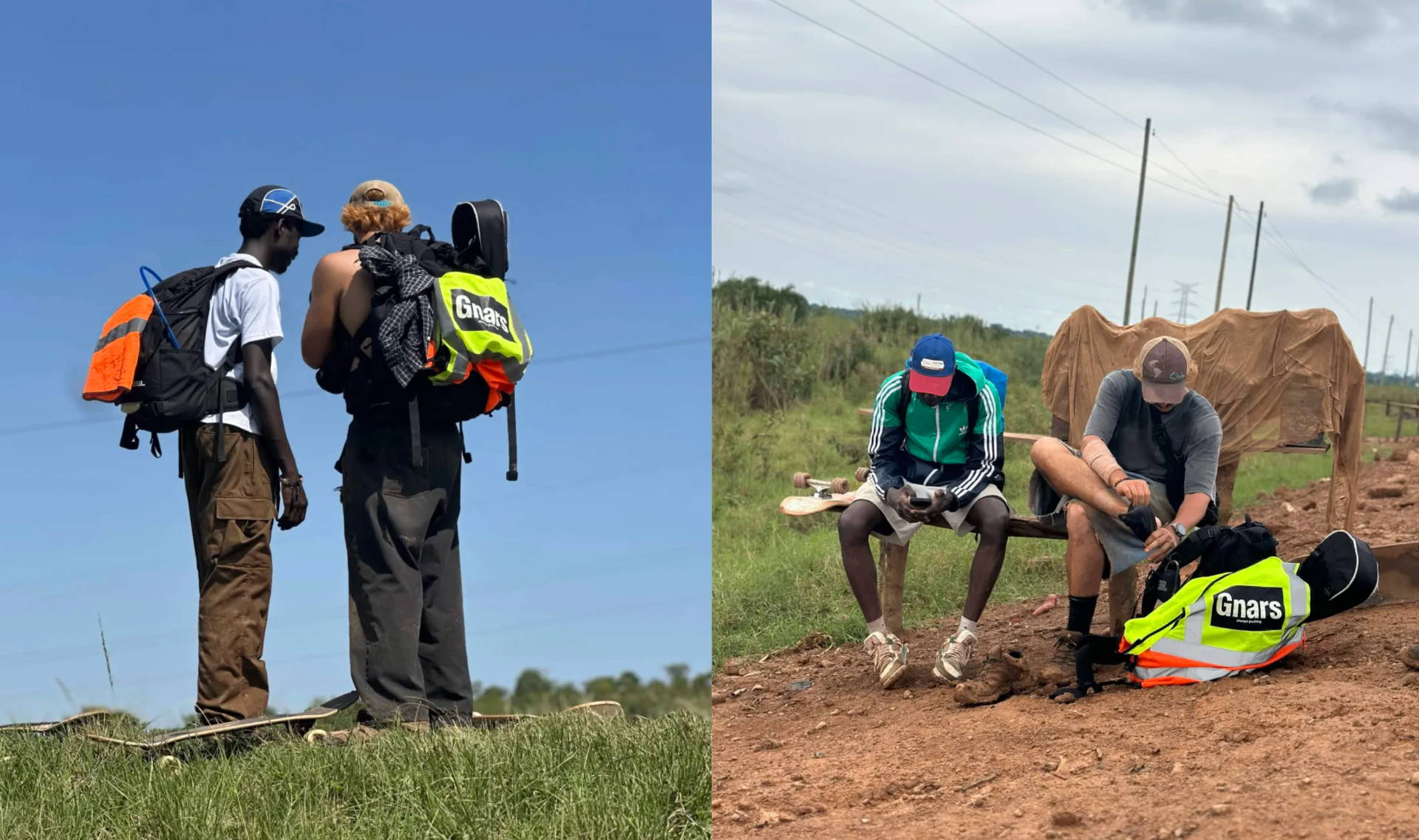
The proposal was not centered only on distance.
Its broader objective was to connect skate communities across borders, bring new participants into the orbit of Gnars, and document the trip as a cultural route rather than a single campaign. In practice, the mission positions governance as a funding tool for field work, mobility, and public-facing cultural production.
Isaac is a co-founder and Executive Director of the Kampala Skateboard Initiative (KSI). In the proposal, his role is tied to vision, strategy, workshops, and international relations. His involvement places the mission within an existing structure of skate community building in Uganda rather than treating it as a one-off appearance.
Ephraim, also a co-founder of KSI, works as a skater, creative director, filmer, and community organizer. His role in the mission is both operational and editorial, linking the road narrative to the local scene-building work that already exists in Uganda.
Jaayfilms brings long-distance travel experience and a strong documentation background. The proposal references his earlier skate journeys across the USA and Japan, which gives the project a media dimension beyond endurance alone.
Together, the three combine local leadership, route execution, and distribution capacity.
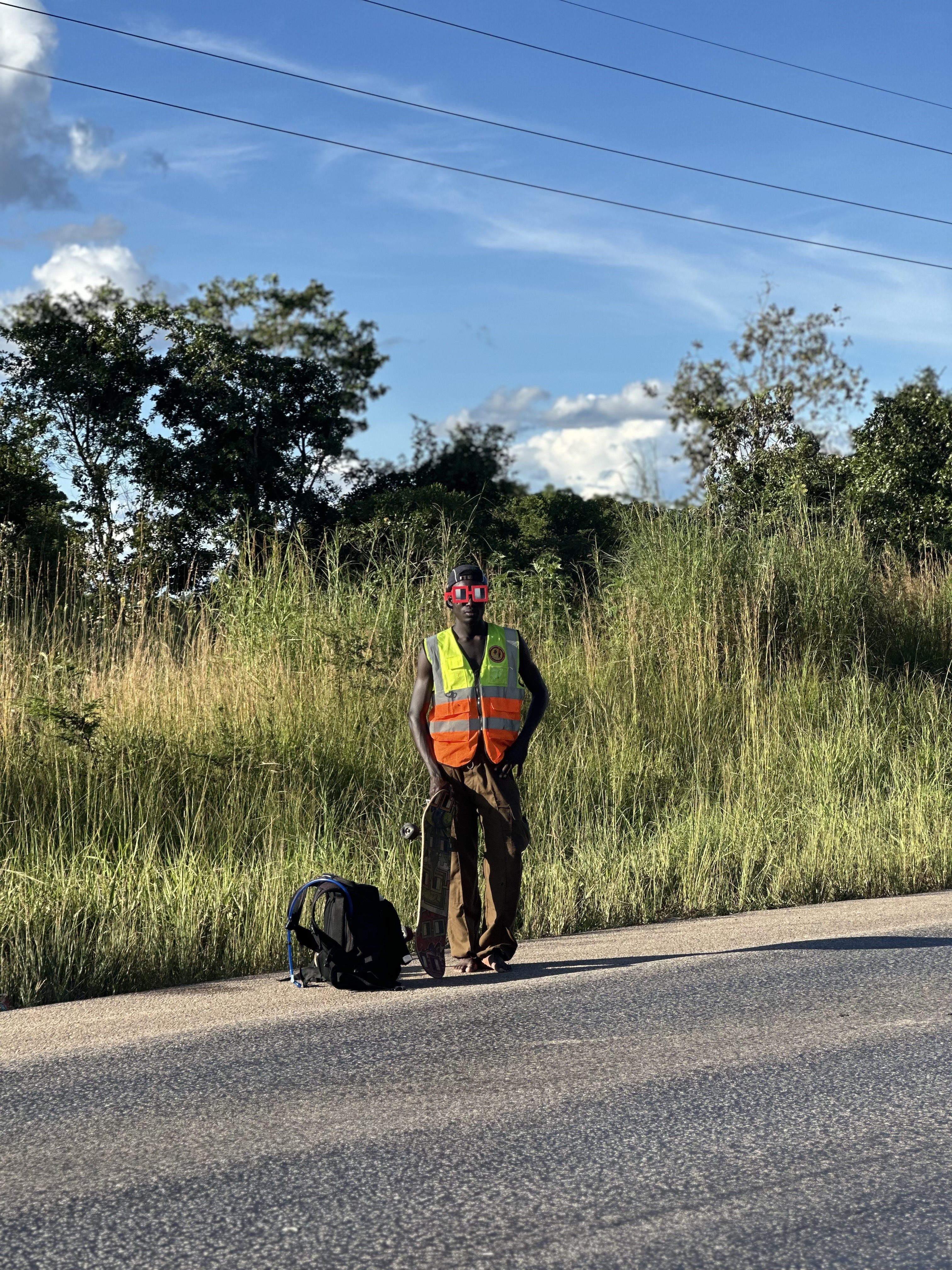
At a basic level, the mission is clear: skate across multiple African countries.
In practice, it functions as a broader cultural and media operation:
A moving skate mission across East and Southern Africa
A community activation route, not just a clip-hunting route
A visibility engine for Gnars in African skate scenes
A documentation project built through video, photos, posts, and local encounters
A proof-of-concept for decentralized athlete support
That last point is central to the story.
Traditional action sports funding is usually organized through a brand-to-rider model. Skate Across Africa follows a different structure: the community backs the mission through governance, the athletes execute it in public, and the value generated is distributed across documentation, visibility, community contact, and long-term cultural positioning.
Gnarly decks for the mission
Special wheels for the mission

For Gnars, the mission is relevant because it activates several layers at once:
Athlete-first: real skaters doing real work, not fake ambassador theater
Hybrid: physical travel, local community touchpoints, and digital distribution moving together
Global: Gnars leaving its comfort zone and showing up where culture is still being built in real time
Onchain-backed: governance is not decorative here; it is the mechanism that made the push possible
Instead of treating international presence as branding alone, the project ties mobility, local context, and public execution into the same editorial frame.
By late April, the mission had already generated enough traction to break outside the immediate Gnars/Nouns bubble.
A recent feature in Botswana Gazette described the trio as skating roughly 6,437 km from Kampala toward Cape Town, with the mission tied to a broader dream of building the biggest skatepark in Africa and expanding youth impact through skateboarding.
The reporting also makes clear that this has not been a polished or frictionless route.
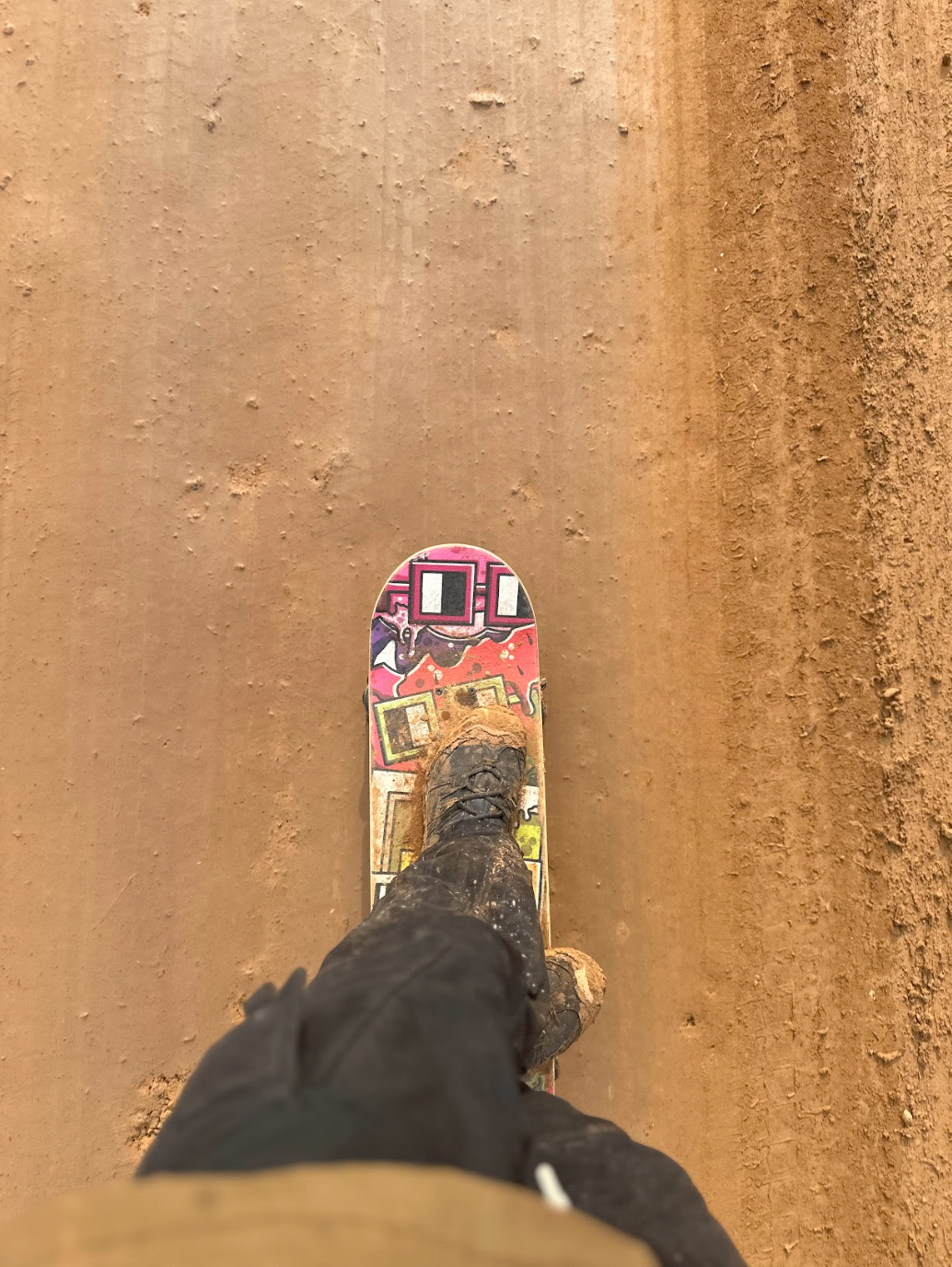
According to the crew, Tanzania was one of the hardest sections, marked by mud, dirt roads, and difficult terrain. That detail gives the project material weight and helps separate it from a purely promotional narrative.
The same article also shows where the mission stood in real time: after passing through places including Zambia and Botswana, the crew was nearing the South Africa leg, but hit a logistical disruption when Isaac and Ephraim needed to return to Uganda to handle visa requirements, while Jaay kept pushing solo toward Johannesburg before reuniting later.

This is where the project becomes more legible as reporting material: it involves border logistics, physical strain, route instability, and ongoing adaptation rather than a closed campaign format.
The mission resonates beyond a single proposal because it sits inside longer-standing skateboarding dynamics: informal networks, shared infrastructure, route knowledge, DIY organization, and mutual support. What Gnars adds is a governance layer that can fund and extend those dynamics without fully absorbing them into a conventional brand model.
Skate Across Africa shows what that can look like when it works:
decentralized funding meets athlete autonomy
local scene knowledge meets global media distribution
skateboarding becomes both cultural practice and connective tissue
One of the most relevant editorial aspects is that Africa is not treated as backdrop. The mission presents the continent as an active field of skateboarding practice, community knowledge, and future infrastructure.

The immediate story remains the South Africa leg, the regroup after visa issues, and the final body of documentation produced on the road.
The broader question is what the mission leaves behind.
If Gnars is serious about building cultural infrastructure, projects like this should not remain isolated miracles. They should become repeatable patterns:
back real athletes
trust local operators
document the process well
turn missions into media
use governance to fund movement, not bureaucracy
In that sense, Skate Across Africa works as both a trip and a case study in how a DAO can fund cultural movement without reducing it to a standard sponsorship package.
From Kampala to Cape Town, Skate Across Africa represents how skateboarding continues to function as a global language capable of connecting radically different realities through movement, struggle, and imagination.
While some regions experience skateboarding through contests, industry pipelines, and performance structures, others still build it from raw concrete, community effort, and the dream of having a permanent place to push.
Explore a selection of special profiles, archives, and links documenting the mission that officially concluded this week, from raw road moments and community encounters to fundraising efforts and the broader vision behind Skate Across Africa.
Supported by Gnars, this mission transforms kick pushes across the continent into direct awareness and fundraising for Uganda’s first permanent public skatepark, documenting not only the physical journey, but the social infrastructure skateboarding creates wherever wheels touch the ground.
⌐◨-◨ Gnars Website ⌐◨-◨ Gnars Zora ⌐◨-◨ Gnars IG ⌐◨-◨ Gnars on Farcaster ⌐◨-◨ Gnars Farcaster Community ⌐◨-◨ Gnars on Youtube ⌐◨-◨ Gnars on Hive ⌐◨-◨ Gnars Zora Community ⌐◨-◨ That's Gnarly ⌐◨-◨ Gnars on Nounspace ⌐◨-◨ Gnars on Giveth ⌐◨-◨ Gnars on Dexscrenner ⌐◨-◨ Lil Nouns IG ⌐◨-◨ Nounish IG